How to read oracle cards step by step: oracle cards vs tarot, choosing a deck, finding card meanings, 7 oracle card spreads, a sample reading and a 30-day practice plan.

How to Read Oracle Cards: Meanings, Spreads and a Beginner Plan

Oracle cards look like tarot’s easygoing cousin. There is no fixed number of cards, no suits to memorize and no single “correct” meaning, and every deck comes with its own guidebook. That freedom is why beginners like them, and also why the first few readings can feel shapeless. This guide shows you how to read oracle cards step by step: how they differ from tarot, how to pick a deck, how to find a card’s meaning when the guidebook is thin, seven oracle card spreads, and a worked sample reading.
Updated November 24, 2026. Oracle cards are a tool for reflection. There is no evidence they predict events, so don’t use a reading to make medical, legal or financial decisions.
Contents
What oracle cards are
An oracle deck is any set of illustrated cards made for divination or reflection that does not follow the tarot structure. One deck may have 36 cards built around animals, another 52 built around goddesses, another 44 affirmations with watercolor flowers. The author decides the theme, the number of cards and the meanings, and writes them up in a small guidebook that ships with the deck.
Most oracle cards carry a title or a short message right on the card, such as “Rest”, “Ask for help” or “New beginnings”. That makes them easier to read than tarot on day one. You see the word, you see the picture, and you already have a starting point.
Oracle readers rarely use the cards to predict events. The usual aim is a message or prompt: what to focus on, what you are missing, what might help. If you have tried our rune reading guide, the logic is similar: symbols as prompts, not forecasts.
Oracle cards vs tarot: the real differences
“Difference between tarot and oracle cards” is one of the most searched questions on this topic, and the answer is mostly about structure.
| Tarot | Oracle cards | |
|---|---|---|
| Number of cards | 78 in a standard deck | Any number; set by the deck creator |
| Structure | 22 Major Arcana + 56 Minor Arcana in four suits (Wands, Cups, Swords, Pentacles) | No shared structure between decks |
| Meanings | A broadly shared tradition; one card means roughly the same across most decks | Unique to each deck and its guidebook |
| Text on cards | Usually just the card name | Often a title, keyword or affirmation |
| Tone | Covers hard themes (the Tower, Ten of Swords) as well as easy ones | Often gentle and encouraging, though some decks are blunt |
| Learning curve | Weeks to months to learn 78 cards | You can read on day one with the guidebook |
| Typical use | Detailed readings on situations and outcomes | A theme, message or prompt; often a daily card |
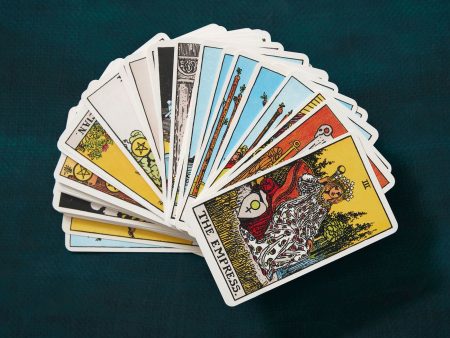
Neither is “more accurate”. Tarot gives you a shared language, so your Three of Cups means roughly what another reader’s does. Oracle gives you freedom and a softer entry point. Plenty of readers use both: a tarot spread for the detail, one oracle card at the end as an overall message. If you are curious about tarot itself, start with our tarot guide for beginners.
Lenormand cards sit somewhere in between. They are a fixed 36-card system with short, concrete meanings (Ship, House, Tree and so on) that readers combine in pairs. Some people call Lenormand an oracle; it really has its own rules.
Choosing your first oracle deck
Because every deck is different, the deck matters more than it does in tarot. A few practical filters:
| Check | Why it matters |
|---|---|
| Theme you actually care about | You will read faster with imagery you like: nature, animals, mythology, astrology, plain affirmations |
| Number of cards | 36–50 is easy to learn; 60+ gives more nuance but takes longer |
| Words on the cards | Helpful at first; some readers later prefer image-only decks for more freedom |
| Guidebook depth | Look at sample pages: one line per card is thin; a paragraph plus a reflection question is ideal |
| Card size and stock | Large cards are hard to shuffle; thin cards wear quickly |
| Tone | Some decks are all positive affirmations; others include challenge cards. Pick what you’ll find useful, not just pleasant |
Our advice: buy one deck and use it for a month before buying another. A second deck too early splits your attention, and you never learn the first one well. You can also make a starter deck yourself: 30 index cards, each with a word and a quick sketch. It sounds basic, but writing the meanings yourself teaches you how oracle reading works faster than any guidebook.
How to find an oracle card’s meaning
“Oracle cards meaning” searches are common because guidebooks vary so much. There is no universal list, but there is a reliable method. Read each card in four layers:
- The title or keyword. The card’s most direct message.
- The image. What catches your eye first? Colors, figures, direction of movement, setting. A path leading off the card suggests something different from a closed door.
- The guidebook. Read the author’s meaning, then put the book down.
- Your question. Ask how the first three layers answer what you actually asked.
When the guidebook and your gut disagree, note both. Over time you will notice which one tends to be more useful for you. Many experienced oracle readers end up relying on the image more than the book.
Jumper cards. A card that falls out of the deck while you shuffle is called a jumper. Many readers treat it as an extra message for the reading. Whether you do is your choice; decide before you start so you aren’t tempted to count only the jumpers you like.
What about reversed oracle cards?
Some guidebooks give reversed meanings and some don’t. Upright-only reading is common with oracle decks, especially those with text on the card. If you do read reversals, the usual approach is a blocked, delayed or internal version of the upright message. Beginners can skip them without losing much.
How to read oracle cards, step by step
- Get to know the deck. Go through every card once, face up. Read the guidebook entry, and jot one word of your own per card.
- Write your question. Open questions work best: “What do I need to know about starting this new job?” works better than “Will I get the job?”. Our list of questions for a reading has more examples.
- Settle in. A minute of slow breathing, a quiet table, phone face down. Rituals like candles or crystals are optional.
- Shuffle. Any method works: overhand, riffle, or spreading the cards face down and mixing them on the table.
- Draw. Cut the deck, fan it out and pick, or take cards off the top. Lay them in your chosen spread.
- Read each card. Use the four layers above, card by card, before you look at the whole.
- Read the spread as a story. How do the cards relate? Repeated colors, a shift from dark to light, two cards “looking” at each other?
- Record it. Date, question, cards, your reading and one action. Look back in a week.
7 oracle card spreads
A spread is just a layout where each position has a meaning. These seven cover most needs, from a quick daily check-in to a full month ahead.
| Spread | Cards | Positions | Use it for |
|---|---|---|---|
| Daily card | 1 | Message or focus for today | Learning your deck; a morning check-in |
| Situation, block, guidance | 3 | Where you are · what is in the way · what helps | Most everyday questions |
| Past, present, future | 3 | What led here · now · likely direction if nothing changes | Seeing a trend |
| Mind, body, spirit | 3 | Thoughts · physical energy and habits · inner life | A wellbeing check-in |
| Two paths | 4 | Option A · outcome of A · option B · outcome of B | Choosing between two options |
| Five-card cross | 5 | Present (centre), past, future, what helps, what to release | Bigger questions with several factors |
| New moon / monthly | 4 | Intention · what to start · what to let go · overall theme | Planning the month ahead |
The daily card is the one to start with. Thirty days of single draws will show you most of a small deck in real situations, and you will learn more from that than from rereading the guidebook. For relationship questions, the two-paths spread adapts well; for love-specific readings, our twin flame reading guide has a few more layouts.
A sample three-card reading
Question: “What do I need to know about the next month at work?” Spread: situation, block, guidance. The cards below are generic examples, not from any specific published deck.
| Position | Card | Reading |
|---|---|---|
| Situation | “Harvest”: a field of ripe wheat | Work you did earlier is ready to show. This is a period to collect results, not to start from scratch. |
| Block | “Hidden Voice”: a figure with a hand over their mouth | You are not speaking up about what you did. Credit is going unclaimed. |
| Guidance | “Bridge”: a stone bridge over a river | Connect: ask for a meeting, link your results to the team’s goals, build the bridge yourself. |
Read together: you have results, you aren’t talking about them, and the fix is to make a connection. The concrete action is clear enough to put in a calendar. Notice how general it is, too. Many people would recognize themselves in it, which is exactly why the action step matters more than the “accuracy”.
Common beginner mistakes
- Redrawing until you like the answer. If you pull again because the first card was uncomfortable, you aren’t reading the cards, you’re reading your hopes. One question, one draw, at least until tomorrow.
- Asking the same question five times a day. Anxiety readings rarely help. If you keep reaching for the deck, close it and talk to someone.
- Reading only the guidebook. The image often says more than the text.
- Yes/no timing questions. Oracle cards give themes, not dates.
- Using the cards for decisions that need an expert. Health, money and legal questions belong with professionals.
The same caution applies when you pay someone else to read for you. A card reader who says your deck shows a curse that costs money to lift is running a known script; see our psychic scams guide.
A 30-day practice plan
| Days | Focus | Exercise |
|---|---|---|
| 1–7 | Meet the deck | One card a day; write the guidebook meaning and your own one-word meaning |
| 8–14 | Trust the image | Daily card; read it before opening the guidebook, then compare |
| 15–21 | Three-card spreads | Two or three readings a week on real questions; record actions |
| 22–30 | Bigger spreads and review | One five-card cross; reread your journal and note which cards keep appearing |
By day 30 you will have a personal meaning for most cards, and a journal that shows you what kinds of messages were actually useful. That journal is worth more than a second deck.
Curious how cards compare with other methods? Our guide to psychic abilities and tools covers them side by side, and the pendulum and tea leaf guides show two very different ways of working with symbols.
FAQ
How do you read oracle cards for beginners?
Write an open question, shuffle, and draw one to three cards. Read each card by its title, its image and the guidebook meaning, then ask how they answer your question. Starting with one card a day is the easiest way to learn a deck.
What is the difference between tarot and oracle cards?
A standard tarot deck has 78 cards with a fixed structure of 22 Major and 56 Minor Arcana, and meanings are broadly shared across decks. Oracle decks have no set number of cards or structure, and each deck’s meanings come from its own guidebook.
Can a beginner use oracle cards without the guidebook?
Yes. Many oracle cards have a title or message printed on them, and the image gives plenty to work with. The guidebook helps at first, but many readers rely on it less over time.
How many cards should I pull in an oracle reading?
One card works for a daily message, three cards for most questions, and four to five cards for decisions or bigger topics. More cards give more detail but are harder to read as a whole.
What are good oracle card spreads?
Popular spreads include the daily card, situation-block-guidance, past-present-future, mind-body-spirit, a two-paths spread for choices, the five-card cross and a monthly new moon spread.
Do oracle cards have reversed meanings?
Some decks include reversed meanings in their guidebooks and many do not. Reading cards upright only is common with oracle decks, so beginners can skip reversals.
Can oracle cards predict the future?
There is no scientific evidence that oracle cards predict events. Most readers use them for reflection, encouragement and focus rather than prediction.
Can you use oracle cards and tarot together?
Yes. A common approach is to do a tarot spread for detail and then pull one oracle card as an overall message or piece of advice.
This guide describes common practice among oracle card readers. Card counts and meanings vary by deck; always check your own deck’s guidebook. We did not review specific commercial decks for this article.

© 2026 bestonlinepsychic.org | Privacy Policy | Terms
We may earn a commission when you use our links. This does not affect our ratings.